|
|||||||||||||||||||||
| |
|||||||||||||||||||||
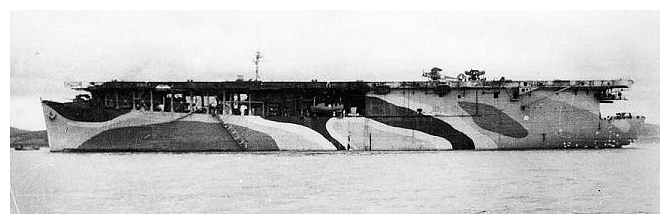
AVENGER, SCYLLA, WILTON and WHEATLAND left Seidisfiord at 21:00 on the 8th to rendezvous with PQ 18. AVENGER broke down shortly after sailing, water contamination in the engines left her dead in the water off Iceland for three hours before she could get underway again. AVENGER launched her first Swordfish for A/S patrol ain the forenoon of the 10th, the temperature continued to drop and it began to snow. The Swordfish was damaged landing on but was serviceable within three hours but no further flying was possible that day nor the next due to the weather. September 12: When the visibility cleared around noon on the 12th a shadowing German Bv138 sea plane was spotted and 4 Sea Hurricanes were scrambled to intercept it. They failed to engage, the German pilot evading them in the clouds. Late that afternoon a Swordfish was launched for a dusk A/S patrol, they returned at 20:50 and reported having sighted 2 U-boats; this was a verbal report made well after the times of the sightings because the convoy was observing strict radio silence, any attempt of locate them by surface escorts was futile. September 13: The morning of the 13th brought more U-Boat sightings; during the dawn patrol launched at 03:45 a submarine was sighted and attacked, his relief took off at 07:00 and sighted 2 U-boats, but both crash-dived before an attack could be made. At 09:52, about 100 miles southwest of Spitsbergen, U-408 fired a spread of three torpedoes at the convoy hitting 2 merchantmen, the STALINGRAD and the OLIVER ELLSWORTH, both sank. Numerous sightings of both submarines and Bv 138s were made during the day but all were fruitlessly intercepted. At 15:00 the force was attacked by twenty Ju 88s of KG 30 which appeared and bombed through gaps in the cloud, no ships were hit but this was a diversion designed to lead the Sea Hurricanes away from the Goldene Zange (Golden Comb) attack that followed behind. A force of 63 enemy aircraft (28 He 111s of I/KG 26 in two waves, followed by 18 Ju 88s of III/KG 26 and 17 from KG 30) came in low at 50 feet, in line abreast to avoid detection; SCYLLA and the escorts put up a barrage of flak shooting down 5 and deterring the aim of others, of 96 torpedoes launched only 8 found a target; the merchant ships AFRIKANDER, EMPIRE BEAUMONT, EMPIRE STEVENSON, JOHN PENN, MACBETH, OREGONIAN, SUKHONA, and WACOSTA. A smaller attack by 9 Heinkel He 115 torpedo floatplanes approached the convoy at 16:15, AVENGER’s aircraft were engaged chasing Bv 138s but the flack barrage claimed one and forced the others to launch their torpedoes too soon. During an interception of one Bv 138 Lt. E. W.T. Taylour of 802 squadron was shot down and killed at 16:15 in position 76°N 24°E (this may have been one of the He 115s recorded as a Bv 138 in error). As night fell, twelve He 115s attacked from the south-west but were deterred by the anti-aircraft barrage; two were shot down. The failure of the Sea Hurricanes to effectively intercept the detected targets prompted Commander Colthurst to re-evaluate how his fighters should be utilised. Sixteen sorties were flown on the 13th with only one enemy aircraft damaged and one Sea Hurricane and its pilot lost. The Germans were probing far enough to prompt a scramble before retreating out of range and the inexperienced pilots struggled to engage in combat. Lessons learned in AUDACITY were now applied to flight operations; one section was to be airborne at all times with a second section manned on the deck at ‘immediate readiness’ to launch if an enemy was sighted, the third section were in the ready room on ‘standby’, the fourth section were ‘available’ at five minutes notice. Should the ‘immediate readiness’ section be launched the ‘standby’ section took their place and the ‘available’ became the ‘standby’. Each section patrolled for 25 minutes before landing on and the pilots went to ‘stand down’ status for a break before re-joining the other sections in the patrol rotation in turn. The Swordfish launched at dawn for the first A/S patrol and maintained one aircraft aloft throughout the day until dusk. The fighter tactics were also changed, the aloft patrol would be vectored to break up enemy formations rather than attempting to attack a single target, the ‘immediate readiness’ section would be launched in support. September 14: The U-Boats returned in the early hours of the 14th Southwest of Bear Island, at 03:30 U-457 fired four torpedoes at the convoy and reported one tanker and one other ship sunk and two hits on a Javelin-class destroyer. In fact, only the oiler ATHELTEMPLAR was hit but still afloat; after the survivors had been picked up the minesweeper HMS HARRIER attempted to scuttle the vessel by gunfire but failed and the tanker was left behind. At 14:30 hours U-408 came across the now capsized wreck of the ATHELTEMPLAR and sank her with a few rounds from her 88mm gun. At 09:40 the patrolling Swordfish sighted U-589 about 7 miles to starboard of the convoy and marked where she had dived by a smoke float before a shadowing Ju 88 approached forcing the Swordfish to break off. U-589 was later sunk at 13:07 by depth charges from the destroyer HMS ONSLOW and a Swordfish. At 12:30 the German torpedo-bombers returned; a formation of III/KG 26 was reported by a Swordfish to be headed for the convoy at wave top height. AVENGER immediately left her position in the convoy to turn into wind and commenced launching the immediate readiness’ fighters to join the pair circling the convoy. She launched 9 Sea Hurricanes before the attackers reached the convoy. As the formation approached the convoy it divided and one part turned towards AVENGER. Her aircraft focused their attention on the group heading straight for the carrier splitting them up and made many release their torpedoes too soon, several where knocked down by the AA barrage. No torpedo hits were achieved and by 12:45 eleven Ju 88s had been shot down. A second wave of Ju 88 bombers of KG 30 approached as the first attack ended, these dive-bombed from 2,000 ft through breaks in the cloud until 14:00; AVENGER and several other ships were near-missed. At 14:05 twenty-two He 111s of I/KG 26 and eighteen Ju 88 torpedo-bombers attacked head on, having received incorrect reports that AVENGER was in front of the convoy. In fact, the AA cruiser SCYLLA was now at the head of the convoy, her barrage and the Sea Hurricanes attacking them from behind forced the enemy to split into two groups as they roared down the convoy. Again, AVENGER was singled out and several aircraft altered course to attack her. Three of the Sea Hurricanes which followed the He 111s into the barrage were shot down by the AA fire, all pilots were rescued by destroyers. Commander Colthurst skilfully handled AVENGER and steered between, or combed, the tracks of several incoming torpedoes in the water. Only one Merchant ship was hit during these airborne attacks, the American vessel MARY LUCKENBACH was hit by a single aerial torpedo. The impact detonated her cargo of 1,000 tons of TNT, vaporizing her and killing the 41-man crew and 24 members of the US Navy Armed Guard. The last attack petered out at approximately 15:30, the convoy escorts claimed 13 torpedo-bombers destroyed; AVENGER’s aircraft flew seventeen sorties and accounted for 5 enemy aircraft destroyed plus 3 probable, and 14 damaged for a loss of the three Sea Hurricanes shot down by friendly AA fire, all pilots safely rescued. A fourth Sea Hurricane was also hit by friendly AA fire but managed to make a forced landing on the flight deck. September 15: A Swordfish was launched for the dawn patrol at 03:00 but fog descended and it was forced to return an hour later. The fog had lifted by noon when AVENGER’s RDF detected a large formation of aircraft approaching. The ship left the convoy to begin flying off the first of 10 fighters to be scrambled. The cloud cover again came to the rescue of the German force, the attacking fighters managed to keep them in the cloud most of the time but bombs were dropped through gaps when they appeared. The raid lasted for about three hours before low fuel forced the bombers to head for base, the RDF screens were clear by 16:45. The U-Boat threat was still present and on investigating a smoke sighting an escort destroyer observed a pair of submarines on the surface, these crash-dived and could not be found on asdic. September 16: U-boat contacts were detected throughout the night and at 03:00 one was able to slip beneath the outer anti-submarine screen in readiness to fire a torpedo salvo at the convoy. U-457 was detect on asdic by the escort destroyer IMPULSIVE which made a depth-charge attack before losing contact amidst the propeller noises of the convoy. On investigating the area, they found oil and bubbles on the sea; U-457 had been destroyed. At dawn on the 16th the A/S patrol duty was handed over from 825 squadron Swordfish to the Catalinas of 210 squadron RAF operating out of Russia. This squadron was detached to Russia specially to provide air cover foe final stages of the convoys passage. Poor visibility kept attacking aircraft at bay; only shadowers venturing near to the convoy which meant that none of her fighters were in action. The Swordfish were stowed in the hangar and AVENGER’s Air Engineering team began assembling the remaining spare Sea Hurricanes and repairing others to maximise the number serviceable for the return leg. AVENGER and her escorts WILTON and WHEATLAND in company with SCYLLA (Flag, Rear-Admiral R L Burnett), the AA ship ALYNBANK, submarines P 614, and P 615 and 16 fleet destroyers, detached during the evening to cover the UK bound QP14 which had sailed on September 13th.
Return Russian Convoy QP 14 September 17 - 19: AVENGER and SCYLLA rendezvoused with the fifteen ships of QP14 at 05:00 on the 17th to escort the convoy to Sedisfjord, Iceland. Several of these vessels were survivors of PQ 17, also two rescue ships, ZAMALEK, and RATHLIN, and a fleet oil tanker GRAY RANGER. A Swordfish was launched to search for a merchant straggler and some destroyers but the weather was so cold the aircraft began to ice up at sea level, eventually having to return to the carrier. Swordfish A/S patrols were flown throughout the day and 4 Sea Hurricanes were kept warmed up on deck. A Swordfish was launched to search for a merchant straggler and some destroyers but the weather was so cold the aircraft began to ice up at sea level, eventually having to return to the carrier. Swordfish A/S patrols were flown throughout the day and 4 Sea Hurricanes were kept warmed up on deck. On the 18th the icy conditions forced the dawn A.S patrol to return early and flying was cancelled until the afternoon when the weather improved; this also brought the first shadower. By the end of the 19th the convoy had been spotted by another shadower but by then was out of range of land-based aircraft. September 20: QP 14 remained undetected until the morning of September 20th; at 06.25 the first U-Boat attack commenced, U-435 fired the first of 5 single torpedoes at the convoy. The submarine commander reported one ship sunk, one damaged and one possibly damaged, however only the final shot scored a hit striking the minesweeper HMS LEDA at 06:31. The U-boat managed to evade the escorts and withdrew. At 18.15 the American merchantman SILVER SWORD was hit on the port side by two torpedoes from U-255. AVENGER continued A/s patrols until 18:45 when SCYLLA, AVENGER, FURY, WHEATLAND, and WILTON detached to proceed Seidisfiord arriving on the morning of the 22nd. The force sailed from Seidisfiord at 0740 the next morning for Scapa, arriving there on the 24th. AVENGER was now released from operation EV duties.
Operation 'TORCH' HMS AVENGER disembarked her squadrons to RNAS Hatston on the 25th to replenish aircraft; both 802 & 883 squadrons re-equipping with Sea Hurricane IIbs, 802 squadron strength was increased to 9 aircraft. The 825 squadron Swordfish detachment was now withdrawn. She was now nominated for support of allied landings in North Africa (Operation TORCH). On October 1st her sister ship BITER arrived at Scapa to work-up with the Sea Hurricanes of 800 squadron in preparation for the upcoming operation. On the 16th AVENGER re-embarked 802 and 883 squadrons from RNAS Hatston as she sailed from Scapa at noon, for passage to the Clyde in company with BITER and VICTORIOUS (Flag of Rear Admiral, Aircraft Carriers), escorted by the destroyers MILNE (Captain (D) Third Destroyer Flotilla) with METEOR, ORIBI, OFFA, FORESTER, and LEDBURY. They arrived at Greenock at 17:00 the following day. The next nine days were spent in the Clyde area for combined operations exercises and working up squadrons; an A/S element was added to the two escort carriers on the 23rd when 833 squadron embarked their Swordfish from RNAS Machrihanish, 'A' Flight flew out to join BITER and ‘B’ flight embarked in AVENGER with 3 Swordfish each.
AVENGER was allocated to the escort force of the 49-ship slow convoy KMS1 which sailed from Loch Ewe on October 22nd, bound for Algiers. She was in company with the AA ship ALYNBANK , destroyer VANSITTART, Sloops DEPTFORD. STORK, Corvettes CONVOLVULUS, GARDENIA, MARIGOLD, PENSTEMON, RHODODENDRON, SAMPHIRE, VIOLET & VETCH, minesweeper ACUTE, ALARM, ALBACORE, CADMUS. HMS BITER left the Clyde with the fast convoy KMF1 (40 merchants and 36 escorts) for Algiers departing at 21:00 on the 26th. These convoys comprised the invasion force elements for operation TORCH, the Allied landings in North Africa. AVENGER now prepared for her role as a Fighter carrier as a part of operation "Torch", the North African landings. There were three RN Task force elements taking part, Force 'H' comprising of Fleet carrier group of FORMIDABLE (6 Seafire, 24 Martlet, 12 Albacore) and VICTORIOUS (6 Seafire, 12 Martlet, 6 Fulmar, 18 Albacore); Centre Naval Task group (covering Oran) comprising of the Fleet carrier FURIOUS (24 Seafire, 9 Albacore) and CVEs BITER (15 Sea Hurricane) and DASHER (9 Sea Hurricane) and the Eastern Naval Task group (covering Algiers) comprising of the training carrier HMS ARGUS (18 Seafire) with AVENGER (15 Sea Hurricane). The landings took place on the night of 7th/8th November 1942. The aircraft of ARGUS and AVENGER made strikes against coastal defences and the airfields of Blida and Maison Blanche; operations went faster than anticipated and the Vichy French forces were subdued within days. Between the 8th and 10th AVENGER launched sixty fighter sorties. She was Targeted by a He111 torpedo-bomber on the 9th, the attack resulted in near misses. On the 10th she suffered engine trouble which reduced her speed to 14 knots; She transferred her 4 remaining serviceable Sea Hurricanes to ARGUS (which had 7 remaining serviceable Seafires). She then entered the newly occupied Port of Algiers for engine repairs; these repairs were completed on the 12th and she sailed for Gibraltar.
Convoy MKF 1(Y) Gibraltar - UK AVENGER sailed from Gibraltar as part of the escort force for MKF 1(Y) at 18:00 hours on the 14th. This convoy comprised of vessels that had taken part in operation 'TORCH' returning to the UK, including the empty troop transports DEMPO, ETTRICK, LETITIA, ORBITA, MACHARDA, ULSTER MONARCH, and WARWICK CASTLE along with heavy equipment transports USS ALMAACK and the USS SAMUEL CHASE (convoy commodore) The escort group had AVENGER and ARGUS for air cover (it is not known how many serviceable aircraft were available on either carrier). The convoy came under attack 45 nautical miles south of Cape Santa Maria, Portugal. Shortly after 03:05 on the morning of the 15th, the convoy escort commander ordered an immediate turn to starboard, detecting a U-Boat in the area; U-155 was at that moment preparing to fire torpedoes, and was forced to fire from a considerably longer distance that originally planned. The submarines commander fired two torpedoes at this longer range, and a third shortly after as the range closed. The first ship hit was the USS ALMAACK, she was hit as she steadied on the new heading, and moments later a second ship, the HMTS ETTRICK was hit. The third torpedo struck AVENGER port side amidships at 03:20. This was a catastrophic hit for AVENGER the resulting explosion ripped through her Bomb Room and ignited the munitions stored there; the ship literally had her guts torn out by the resulting secondary explosions. The centre section of the ship gone her bow and stern sections rose in the air as her back broke; HMS AVENGER sunk in under 5 minutes with only 12 survivors. AVENGER's Commanding Officer, 67 Officers and 446 ratings were lost.
Writing to the Admiralty Lieutenant Commander N. F. Kingscote, Commanding Officer of the HMS ULSTER MONARCH, wrote; The Destroyer GLAISDALE searched until dawn, but found only 12 survivors.
Content revised: 31 October 2021
|
|
|
|||||||||||||||||||
|






Comments (0)