|
|||||||||||||||||||||||||||||
| |
|||||||||||||||||||||||||||||
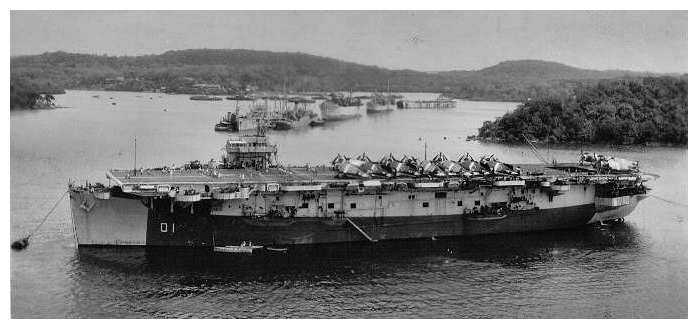
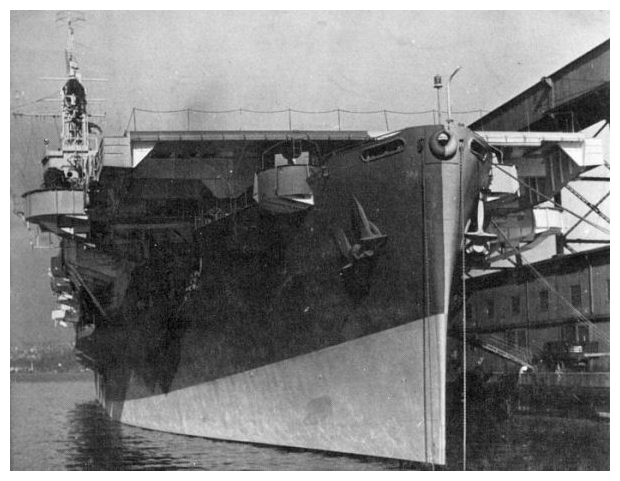
Fitting out as assault carrier: January -May 1944 The assault CVE would provide air cover until shore based air strips became operational. The modifications involved many new pieces of equipment being installed; a new type 277 radar, a new telephone system consisting of over 100 telephones, a new Briefing Room and `Army Plot' Room and cabins added around the 'Aircraft Direction Room' and numerous other additions such as extra W/T and R/T sets and still further improvements to the bridge. Another important modification was an anti-aircraft armament upgrade; all existing single Oerlikon mounts on the Gallery Deck and foc'sle deck, were to be changed for fourteen powered twin mountings.
In late April AMEER carried out trials and work-up in Clyde
before embarking a ferry load of aircraft and stores for
delivery to Ceylon. While in the hands of the dockyard she was
allocated for service with the Eastern Fleet for operations with
the 21st Aircraft Carrier Squadron (21 ACS) in the Indian Ocean.
HMS AMEER sailed from the Clyde on May 5th 1944 as part of
convoy KMF 31 bound for Port Said on the first leg of her
journey to Ceylon. She arrived at Port Said on 19 May and
proceeded through the Suez Canal into the Red Sea, and on to
Aden. She arrived at Trincomalee on June 27th and was to spend
her first month in the area operating as a ferry carrier.
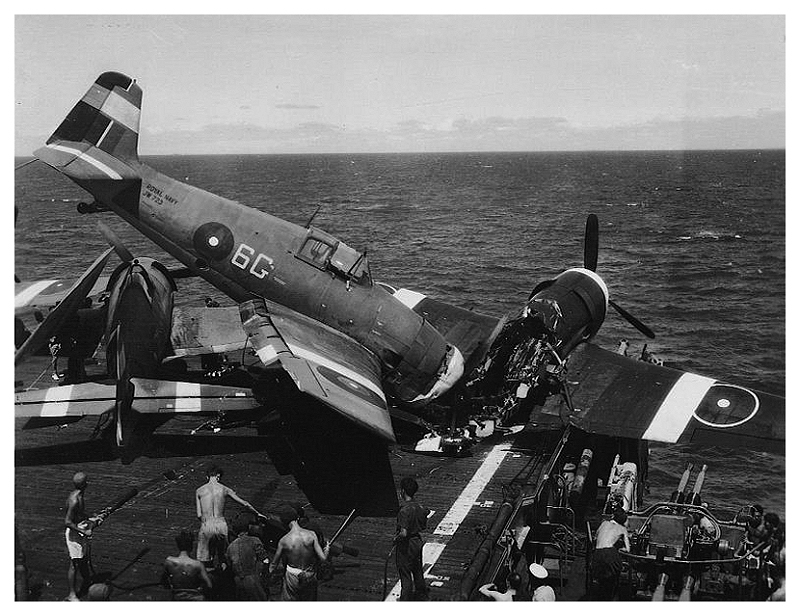
A new commanding officer arrived aboard on July 8th, Captain John H, Lewes CBE relieved Captain Yates. Captain Lewes had commanded destroyers earlier in the war and joined AMEER from the staff of Rear Admiral, Naval Air Stations Indian Ocean at HMS Bherunda, RNAS Colombo Racecourse. From the end of July 1944 AMEER joined sister CVE HMS BATTLER on trade protection duties in the Indian Ocean, embarking 845 squadron's 12 Avengers and 4 Wildcats on the 26th from RNAS Katukurunda. She was to spend the next three months escorting convoys in the Indian Ocean making short return visits to port to store ship. This was an uneventful period both for the squadron and for the ship, no enemy targets were engaged and no flying accidents are recorded. HMS AMEER was relieved of her trade protection duties in mid October, when 845 squadron flew ashore to RNAS Colombo on October 20th. The Eastern Fleet was disbanded and two new fleets, the East Indies Fleet, and the British Pacific Fleet were brought into being on November 23rd at Trincomalee. HMS AMEER was issued a new, buy temporary, pennant number 'R302' the change was necessary to allow for integration with US task groups in the Indian Ocean and Pacific theatres; it is unclear if this number was ever applied. After a short period of defect rectification AMEER sailed for Cape Town, South Africa where she was to collect her new squadron, 804 Naval Air Squadron, Equipped with 24 Hellcat IIs the squadron had formed at RNAS Wingfield, Cape Town on September 1st 1944 and having completed her work-up was ready for combat operations. The squadron flew aboard on December 6th to conduct deck landing practice and two aircraft were damaged in the exercise; Hellcat JW769 flown by Sub Lt. JA Scott miss timed the pitching of the ship and the tail hit the deck heavily on landing, while Hellcat JW749 flown by Lt. OF Wheatley caught No.7 wire and went into no.1 barrier. This performance was repeated by Lt. B Wiseberg flying Hellcat JW736 the next day A further two aircraft were damaged on December 12th Hellcat JV314 flown by Sub Lt. JA Young and Hellcat JW723 flown by Lt WM Barr, both were barrier crashes. AMEER arrived back at Trincomalee on December 19th and the five damaged aircraft were offloaded to the RN Air Maintenance Yard at Clappenburg Bay. She then proceeded to Colombo, 804 flying ashore to RNAS Colombo on the 20th.
HMS AMEER next embarked 845 squadron from RAF Vavuniya, Ceylon,
on December 24th, one aircraft, Avenger IZ195 flown by Lt. WE
Griffiths was involved in a barrier crash while joining the
ship, The embarkation was only for a short period of operation
before the squadron transferred to HMS BEGUM on the 29th.
In the New Year AMEER began operating in her role of assault carrier; she re-embarked 804 squadron RNAS Trincomalee and sailed to Chittagong to join Force 61 with the Cruisers NEWCASTLE, PHOEBE and NIGERIA. Destroyers RAIDER, RAPID and PATHFINDER. This was a bombardment force in support of landings by 3rd Commando Brigade on Akyab Peninsula, Burma, operation 'LIGHTNING'. Hellcats from AMEER were to provide Combat Air Patrols (CAP) over the force and spot 'fall of shot' for the bombardment, the bombardment force; however due to reports that the Japanese had withdrawn for the target area on December 31st NEWCASTLE, NIGERIA, KENYA, RAPID, RAIDER, and PATHFINDER returned to Trincomalee arriving on 5th January, while PHOEBE remained on the coast as a Fighter Direction Ship. AMEER remained on station to support the main force, TF64, providing CAP and air support for the landings which commenced on January 3rd, this was a swift operation, the island was fully occupied by the end of the following day. On returning to Trincomalee AMEER was assigned to the same role in support of operation 'MATADOR', the amphibious landings on Ramree Island. The bombardment force for this operation comprised of the battleship QUEEN ELIZABETH, escort carrier AMEER and destroyers NORMAN, PATHFINDER and RAIDER. The order to put to sea came on January 18th and AMEER, in company with RAIDER sailed that afternoon, QUEEN ELIZABETH, NORMAN and PATHFINDER sailing later that day. The Force was joined by the Sloop REDPOLE and Frigate SPEY on the 20th and the Cruiser PHOEBE on the 21st as the force took up station off Ramree Island. Bombardment of the northern tip of the Island commenced at 08:30, one hour before the landing of troops from the 71st Brigade of the 26th Indian Division was to commence. AMEER provided CAP and carried out fall-of-shot spotting. Bombardment was carried out on January 20th and the landing took place on 21st;later that day, her task completed, QUEEN ELIZABETH returned to Ceylon in company. with NAPIER and REDPOLE . Flying operations went well, there were only two flight deck crashes during this operation, Hellcat JW745 caught a late wire and went into the barrier, on the 21st and Hellcat JW760 was lost on the 24th when it crashed on the flight deck and went over the side into the sea. The pilot Lt. KR Hickson was safely rescued. Having completed her mission in the Ramree Island landings AMEER transferred to Force 65 on January 25th for further amphibious landings, Operation 'SANKEY'. Elements of TF65, the Cruisers NEWCASTLE (Rear Admiral A.D. Read, CB, KENYA, NIGERIA, and Destroyer PALADIN had sailed from Trincomalee on January 23rd with Force 'Wellington' a force of 500 Fleet Royal Marines embarked aboard the cruisers. HMS AMEER, the Cruiser PHOEBE, Destroyers RAIDER and NORMAN, and Frigates TEVIOT and SPEY having disengaged from the 'MATADOR' operations and steamed south to rendezvoused with the main force on January 25th to provide air cover during landings on Cheduba Island.. D-Day for Operation 'SANKEY' wasJanuary26th and Hellcats from 904 squadron provided CAP and air cover for the landing force of Landing Craft with BYMS and an M.Ls escorted by the Destroyer RAPID.
Force 65 left the Arakan area late on the afternoon of January
31st after carrying out a final bombardment on targets on Ramree
Island. NEWCASTLE and KENYA arrived at Trincomalee on February
2nd, NIGERIA, PHOEBE, AMEER, TEVIOT, and SPEY arrived
Trincomalee February3rd, 804 squadron disembarking to RNAS
Trincomalee AMEER's next operation commenced on February 22nd when she sailed as part of Force 62 to undertake operation 'STACEY'. Force 62 comprised of the CVEs EMPRESS (flying the flag of Vice Admiral Walker) and AMEER, the cruiser KENYA, destroyers VOLAGE, VIRAGO, VIGILANT, and frigates SPEY, SWALE and PLYM. Logistic support was provided by the Tanker Group, Force 61, RFA ECHODALE escorted by the frigate TRENT. Operation STACEY was a series of photographic reconnaissance missions covering Sumatra and the Kra Isthmus. For this operation a reduced 804 squadron had embarked on February 20th, a flight of four were detached to operate from EMPRESS to provide fighter escorts for the Photo reconnaissance Hellcats of 888 squadron. On the 24th and 25th the force was cruising around the Andaman Islands; small groups of Japanese aircraft were picked up on the radar screens but it was not until March 1st that the first enemy aircraft were engaged by 804 Squadron Hellcats. At 0824 hours a flight of four of AMEER's planes engaged a Ki46 Dinah 100 miles W of Katchell Isle, Nicobar which broke up when attacked and crashed into the sea. At 1045 a flight of two from EMPRESS attacked a Ki43 Oscar which dove into the sea, and at 1350 a pair of Hellcats from AMEER's CAP forced another Ki43 Oscar into the sea. These three Japanese aircraft were the first to be shot down by fighters operating from British escort carriers. On completion of the photo reconnaissance of the Kra Isthmus, the adjacent islands and Penang, the ships of Force 62 had moved to a position off Simalur Island by March 4th where similar missions were carried out over Sumatra and Sabang. One Hellcat was lost during this operation, on the 26th Lt. RJH Cross flying in JW738 struck his aircraft's tail on the rounddown and went over the port side into the sea, he was safely rescued by the destroyer screen.
Force 62 proceeded to rendezvous with the oiling force on March
2nd and continued the operation. On completion of Operation
STACEY Force 62 returned to Trincomalee on March 7th. HMS AMEER
disembarked 804 squadron to
RNAS Colombo on March
10th 1945. At some point during march the ship sailed for Durban to undergo boiler clean and a period of defect ratification. on completion she embarked the 18 Hellcats of 896 squadron by crane from the quayside on April 24th. The squadron had flown into RN Air Section Stamford Hill, Durban on April 22nd from RNAS Wingfield, Cape Town. A further 6 aircraft arrived on the 26th, having been delayed at SAAF Port Elizabeth , initially through sabotage, then by bad weather. The personnel and aircrew were embarked and AMEER sailed for Madras. On reaching the Indian coast 896 flew ashore to RNAS Tambaram, AMEER proceeded to Trincomalee. The ship received her third commanding officer during May, Commander Peter D.H.R. Pelly, DSO relieved Captain Lewes. Commander Pelly's previous appointment was at the Admiralty Plans division in London, prior to that he served in Cruisers. AMEER re-embark 804 squadron on May 14th; Hellcat JX883 flown by Sub Lt. DP May missed all the arrestor wires , went through No. I barrier and was halted by No.2. The squadron was to remain embarked until AMEER was to complete her next offensive operation which commenced on June 14th.
This last period of flying operations had a heavy toll on the
squadron strength, on May 28th four aircraft were put out of
action when Lt. T H Pemberton's aircraft, Hellcat JW723, bounced
on landing, the hook missed all the wines and broke through the
barriers into the aircraft park, causing damage to t JX827,
JW733 & JX889. A fifth aircraft was damaged the following day
when Hellcat JW725 went into the Barrier, and a sixth, Hellcat
JX801 on June 1st. On reaching the northern approaches to the Malacca Straits, aircraft of 888 Squadron made successful photographic reconnaissance flights over southern Malaya on the 18th, 19th, and 20th June. The squadron was down one aircraft after the first sortie as Sub Lt. EC Godden in Hellcat JV228; caught late wire and hit the barrier. Fighter strikes against the airfields at Lhoksemawe, Medan, and Binjai were made by aircraft of 809 Squadron Seafires, 804, and 808 Squadrons Hellcats on 20th June. Runways at Medan and Binjai were put out of action with 500 lb bombs. Attacks on grounded enemy aircraft resulted in 3 being destroyed, 7 left burning and probably destroyed and 9 damaged. Aerodrome buildings, locomotives, and rolling stock were also effectively strafed. 2 junks, - one carrying oil - were attacked and set on fire off Medan. Operational looses were 1 Hellcat shot down by A.A. fire. Force 63 was not challenged throughout the operation.
HMS AMEER returned to Ceylon on June 23rd, and serviceable
aircraft of 804 squadron flew ashore to
RNAS Tambaram; their
place was taken by the Hellcats of
896 squadron which
transferred to AMEER form
EMPRESS on the 24th for upcoming
operation in July. 888 flew ashore to
RNAS Colomboon
June 25th.
This operation was in preparation for Malayan coast landings and included screening operations for 6th Minesweeping Flotilla (Force 62, 9 minesweepers) during clearance of mines in approaches to the Malacca Straits and the bombardment of Car Nicobar. AMEER was to operate as part of Force 61 which comprised of the cruiser NIGERIA, CVEs AMEER (896 squadron) and EMPEROR (800 Squadron) Destroyers ROEBUCK, ESKIMO and VIGILANT as screen. The force sailed from Trincomalee on July 2nd, Force 62 carried out minesweeping operations between the 5th - 10th while NIGERIA carried out 8 bombardments between the 5th - 9th. Hellcats from AMEER and EMPEROR carried out air strikes against targets on Car Nicobar and Nancowry.
Further air strikes were launched on the 11th when AMEER and
EMPEROR launched a total of 24 aircraft to attack airfields at
Kota Raja and Lho Nga in NW Sumatra. A single Japanese aircraft
approached and was shot down. Four Hellcats were lost on
operation 'COLLIE' and two pilots were killed; Sub Lt. W Stewart
was killed when his aircraft Hellcat JX677 Swung to port on a
dawn take off on July 5th and dove into the sea, it sank
immediately. The other fatality was the 896 squadron C.O. Lt.
Cdr RM Norris, his Hellcat JX680 was hit by flak during a
shipping strike on July 7th, and dove into the sea on fire.
Force 61 withdrew and returned to Trincomalee on July 14th. HMS
AMEER arrived back at Ceylon and 896 squadron was disembarked to
RNAS Trincomalee on the 18th.
The force left Trincomalee on the 19th and after passing through the Sombrero Channel during the night of 22nd/23rd July, arrived off Phuket a.m. on the 24th. The operation began later that day and was to last for three days. This was an intense flying period for the two CVEs, over a 3 day period Hellcats from both carriers flew over 150 sorties against targets on the Kraa Isthmus. Targets included shipping, rail traffic and airfields; three small ships were destroyed and eleven others strafed in the Singora area, fifteen locomotives were put out of action, and wagons strafed, on the railway line between Bandon and Dhungsong Strikes destroyed or damaged more than 30 Japanese aircraft on the ground, and a camp at Huatsei was bombed
On July 26th HMS AMEER was attacked by a Kamikaze, a single
'Sonia' attempted to dive onto AMEER, it was hit and
successfully deflected by fire from the ships' defensive
armament, splashing into the sea some 500 yards out. Operation
LIVERY was the last offensive operation carried out by the East
Indies Fleet in WW2; two minesweepers were sunk during the
operation; the remaining ships of Force 63 returned to
Trincomalee on July 28th. On August 11th the force was ordered to hold west of 90 degrees East and await further orders; the operation was eventually cancelled in light of the news of Japan's announced willingness to accept the Allies surrender terms. The Force subsequently returned to Trincomalee, arriving on August 15th when the Station General Message 'SUSPEND OFFENSIVE OPERATIONS AGAINST JAPANESE FORCES' was made to all ships and allied forces.
HMS AMEER celebrated V-J Day in Trincomalee harbour but the
festivities were brief, the ship was back at sea for flying
operations a few days later with 804 squadron. The first peace
time flying accident occurred on the 23rd when Lt RA Guinness,
in Hellcat JX802, caught no.1 wire and dropped his port wing on
landing, his aircraft slewed to port and crashed into the port
walkway.
Shortly after these forces took passage eastward delays in negotiations, and in the arrival of the Japanese Emperor's orders to cease hostilities in South East Asia became apparent; orders were issued postponing the start of 'JURIST' and on August 20th all forces took shelter on the north east coast of Great Nicobar Island. Political constraints also meant that no landing could take place until after signing of surrender in Tokyo. These delays meant that all plans were now to change, the occupation of Penang was to be undertaken as Operation JURIST and the occupation of Sabang as Operation BEECHAM. Operation TIDERACE, the occupation of Singapore by the 5th Division. Carriers of the 21st Aircraft Carrier Squadron were to provide air cover for the various forces and convoys that were to take part in these operations (AMEERs role is not well documented but she was at sea and conducting flying operations during late August).
Force 11 arrived off Penang and Force 68 off Sabang on August
28th, and negotiations for the formal surrenders at Penang and
Sabang commenced. On august 31st the Surrender of Japanese
forces in Sumatra was carried out on board HMS LONDON, followed
by the Surrender of Japanese forces in Malaya was accepted on
board HMS NELSON on September 1st. The main surrender document
which was signed in Tokyo Bay on the morning of September 2nd
and HMS LONDON landed her Royal Marines for the occupation of
Sabang a few hours later. Marines from NELSON occupied Penang
the following day.
Operation TIDERACE commenced with sailings from Trincomalee and
Rangoon on August 31st bound for Singapore. Force 'N' under Flag
Officer Rear Admiral C.S. Holland, CB in the Cruiser SUSSEX,
with destroyer VIGILANT, was to join with a convoy consisting of
26 L.C.I. (L), RFA DEWDALE, Hospital Ship . AMARAPOORA, and HMS
KEDAH (H.Q. Ship of Rear Admiral J.A.V. Morse, CB, CBE, DSO,
Flag Officer Malaya designate) which had sailed earlier. HMS
SUSSEX and Force 'N' arrived off Singapore on September 4th. The
surrender of Japanese forces in Singapore was accepted on board
SUSSEX later that day.
On the 11th Force 61 anchored in Singapore Roads between 0930
and 1030; later the order was given for part of the force to
proceed into the harbour. The CVEs
EMPEROR,
HUNTER,
KHEDIVE and
STALKER
anchored in Keppel Harbour, Singapore. AMEER and
EMPRESS
[1]
Note: The following day AMEER was released from 'ZIPPER' and sailed for Trincomalee, arriving there on the 20th. 804 squadron flew off the ship at the start of October and departed for RNAS Coimbatore, Southern India, arriving there on October 3rd.
As part of the rapid rundown of naval forces following the end of the war AMEER was nominated for return to UK for Paying-off and once her squadron had left work began on preparing for her voyage home. After storing ship and loading passengers and cargo AMEER sailed for the UK on October 30th 1945. Among her passengers were the personnel of 804 squadron, the aircraft had been withdrawn on arrival at RNAS Coimbatore and the aircrew and other squadron personnel assembled at Trincomalee before embarking on the 30th. AMEER arrived on the Clyde on November 18th and unloaded her passengers and cargo; 804 squadron was officially disbanded on arrival on the Clyde.
HMS AMEER was no longer
required for service in the Royal Navy and the majority of her crew
were drafted to RN Barracks, a steaming crew was left aboard to
handle the ship on her final Atlantic crossing. Work began to
prepare her for her return to the custody of the US Navy as soon as
her passengers had left, de-storing her and removing Admiralty
equipment before she moved to Plymouth for the removal of other
equipment and other stores. From Plymouth she proceeded to
Southampton were she embarked 476 U.S. troops for passage to Newport
News.
CVE - 35 was returned to US Naval custody at Norfolk, Virginia on January 17th 1946., No further use was too be made of her as an aircraft carrier and she was marked for disposal, and struck from the Naval Vessel Register on March 20th 1946. On September 17rh1946 she was purchased by the Robin Line (part of the Seas Shipping Co., Inc., of New York); on completion of her conversion into a passenger freighter she was renamed S.S. 'ROBIN KIRK'. She was scrapped in Taiwan in 1969.
Content revised: 05 January 2022
|
|
|
|||||||||||||||||||||||||||
|







Comments (0)